
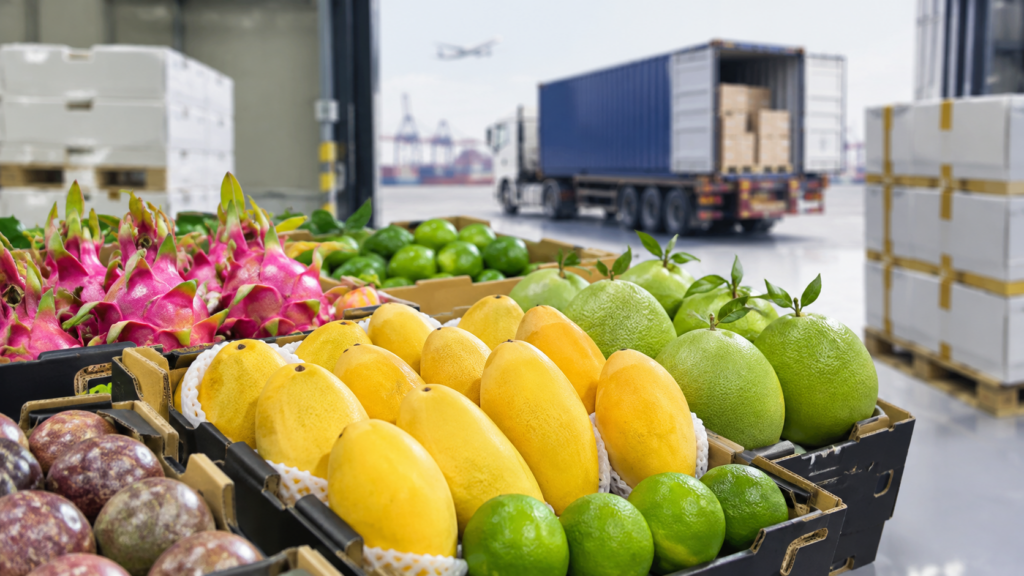
Exporting fresh fruit internationally involves much more than moving produce from one country to another. From selecting the right growing regions to maintaining quality throughout packing, storage and transport, every stage of the supply chain plays an important role in delivering fruit that meets market expectations.
For exporters, the challenge is not only to provide good-quality fruit, but to ensure that quality is maintained consistently from harvest through to arrival.
1. It Starts with the Right Growing Areas
Successful fruit export begins at the farm.
Factors such as climate, soil conditions, farming practices, harvest timing and crop management can all influence fruit quality. Exporters therefore need to work closely with reliable growers and select produce that meets the requirements of the destination market.
For tropical fruits such as mango, dragon fruit, pomelo, passion fruit and lime, careful harvesting is particularly important. Fruit must reach the right level of maturity while still being suitable for handling and international transport.
2. Quality Control Before Export
Before fruit is packed for export, it needs to be inspected for quality, size, appearance and condition.
Depending on the product and market, checks may include:
- Fruit maturity
- Size and weight
- Skin condition and appearance
- Damage or defects
- Packaging requirements
- Traceability information
Consistent quality control helps reduce problems later in the supply chain and ensures buyers receive products that match agreed specifications.
3. Packing and Post-Harvest Handling
Good packaging protects fresh produce throughout transport.
Fresh fruit can be sensitive to pressure, temperature changes, moisture and handling, so the packing process needs to balance protection with ventilation and efficient logistics.
Depending on the fruit and destination market, post-harvest processes may also include cleaning, grading, treatment, pre-cooling or other market-specific requirements.
4. Cold Chain Management
Temperature control is one of the most important parts of fresh fruit export.
Once harvested, many fruits continue to ripen and deteriorate. Maintaining the correct temperature throughout storage and transportation helps slow this process and preserve freshness.
A reliable cold chain can involve:
Farm → Packhouse → Cold Storage → Transport → Port or Airport → Destination Market
Any major interruption along this journey can affect shelf life and product quality.
5. Export Documentation and Market Requirements
Each destination market has its own import conditions and documentation requirements.
These can include phytosanitary requirements, certificates of origin, packing lists, commercial invoices, treatment certificates and other supporting documents.
Exporters need to understand the requirements of both the origin and destination markets before shipment to reduce the risk of delays or clearance issues.
6. Choosing the Right Transport Method
Fresh fruit may be shipped by sea or air depending on the product, shelf life, order size and buyer requirements.
Air freight provides faster delivery and can be suitable for more time-sensitive or premium products, while sea freight may provide better economics for larger commercial shipments.
The right option depends on balancing freshness, transit time and total landed cost.
Building a Reliable Supply Chain
For international buyers, consistency is just as important as product quality.
A reliable export partner needs to coordinate growers, packing facilities, quality inspections, documentation and logistics so that each shipment can be managed from origin through to destination.
At UKH Global, our goal is to connect trusted agricultural suppliers with international markets while supporting quality, traceability and reliable delivery throughout the supply chain.
Looking for Vietnamese Tropical Fruit?
UKH Global works with suppliers in Vietnam to bring tropical fruit products to international markets, including fresh, frozen, dried and processed fruit products.